

Reducing Sensory Overload in the Modern Workplace
Acoustics and texture as architectural tools for mental clarity. How the most invisible details — what your ears and skin perceive — quietly govern whether a workspace makes you sharper or more exhausted.
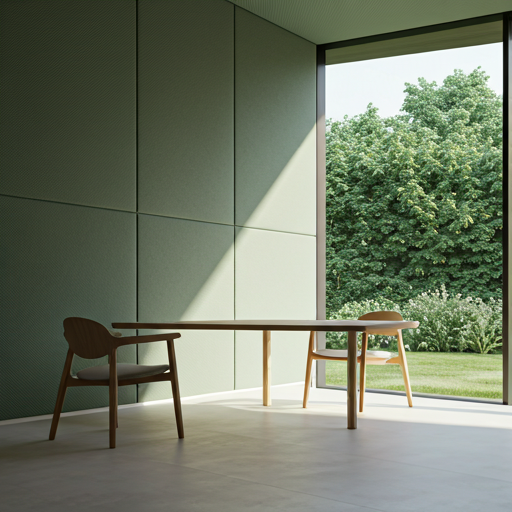
The open-plan office was supposed to make collaboration effortless. Two decades of data suggest it accomplished the opposite: a 70% drop in face-to-face interaction and a measurable rise in cortisol across knowledge workers who spent their days exposed to a wall of ambient stimuli.
The problem isn't noise. It's unpredictability.
The brain habituates rapidly to steady sound. What it cannot ignore is irregularity — a colleague's laugh, a chair scraping, a phone ringing in the next pod. Each event consumes attention, then leaks it back slowly. The cumulative tax on focus is what people report as exhaustion.
Three architectural levers
Acoustic absorption. Felt baffles, perforated wood, plant walls — anything that reduces reverberation time below 0.5 seconds. The room stops echoing.
Material warmth. Replacing hard glossy surfaces with matte natural materials lowers the brain's vigilance response. The eye reads the space as familiar, not industrial.
Zoning by intent. Distinct atmospheres for focus, conversation, and pause — separated not by walls but by light, ceiling height, and the materials underfoot. The body adjusts before the mind does.
Conscious workplaces don't shout. They give the nervous system fewer reasons to brace.